A car can feel perfectly normal on a flat road and then start making noise the moment one wheel climbs a speed bump or drops into a rough patch. You may hear a dull clunk from underneath, a rubbery squeak near one corner, or several small knocks as the suspension moves up and down.
Those sounds happen because uneven roads make suspension and steering parts move through a much larger range than they do on smooth pavement. The type of noise, which side it comes from, and whether it happens when one wheel moves or both wheels move together can help us narrow down the source.
Worn Sway Bar Links Can Create a Sharp Clunk
Sway bar links connect the sway bar to the suspension. Their job is to help transfer force from one side of the vehicle to the other and control body roll during turns.
When the small joints or bushings inside the links wear, extra clearance develops. The link can then knock against itself as the suspension changes direction.
At our shop, sway bar link noise often shows up most clearly when one wheel hits a bump before the other. You may hear several quick clunks over a rough parking lot but almost nothing on a highway. The links can look intact from a distance, so we check them for looseness instead of judging them only by appearance.
Control Arm Bushings Can Squeak or Knock
Control arm bushings are rubber or hydraulic mounts that let the suspension move while keeping the control arm in the correct position. As the rubber ages, it can crack, separate from its sleeve, or become stiff.
A dry or deteriorated bushing can squeak as the arm moves. If the rubber has torn enough to allow excessive movement, the sound may turn into a heavier clunk when the vehicle goes over a bump or during braking.
Some clues that make us look closer at bushings include:
- A squeak as the body rises and falls
- A dull knock over speed bumps
- The steering shifting slightly during braking
- Uneven tire wear
- A loose feeling when the road surface changes
- Visible cracking or separation in the rubber
A worn bushing can affect alignment under load, so it is more than just a noise problem once the movement becomes excessive.
Ball Joints Can Knock as the Suspension Moves
Ball joints allow the steering knuckle and suspension to move through different angles while keeping the wheel securely attached. As they wear, play can develop between the internal ball and socket.
That looseness may create a clunk over bumps, especially when the wheel changes direction quickly. In more advanced cases, the steering can begin feeling vague, or the tire may develop uneven wear.
During an inspection, we check ball joints using the procedure appropriate for that suspension design. Simply pulling on the tire isn't enough on every vehicle because some joints load differently and require the suspension to be supported in a specific way before play becomes obvious.
Strut Mounts and Shocks Can Make Their Own Noises
Shocks and struts control spring movement, but the mounts and bushings around them also have to absorb force. A worn upper strut mount can knock or squeak when the suspension compresses. On some front suspensions, the mount also turns with the steering, so you may hear noise while turning as well.
A worn shock bushing can create a smaller knock where the shock attaches to the body or suspension. We also look for leaking dampers and worn internal components, but a shock does not have to be visibly leaking before it develops a problem.
If the car also bounces several times after a bump or feels unsettled on rough roads, the damper itself becomes more suspicious.
Broken Springs Can Hide in the Spring Seat
A coil spring can break near its bottom or top end, and the damaged section may stay trapped in the spring seat. From beside the car, nothing may look obviously wrong.
The broken end can shift as the suspension moves and create a clunk, pop, or metallic scraping sound. One corner of the vehicle may also sit slightly lower.
We compare ride height and look closely around the spring seats when the noise comes from one specific corner. A broken spring should be repaired, not treated as a harmless noise, because it affects ride height and suspension travel.
Loose Exhaust or Underbody Parts Can Sound Like Suspension Trouble
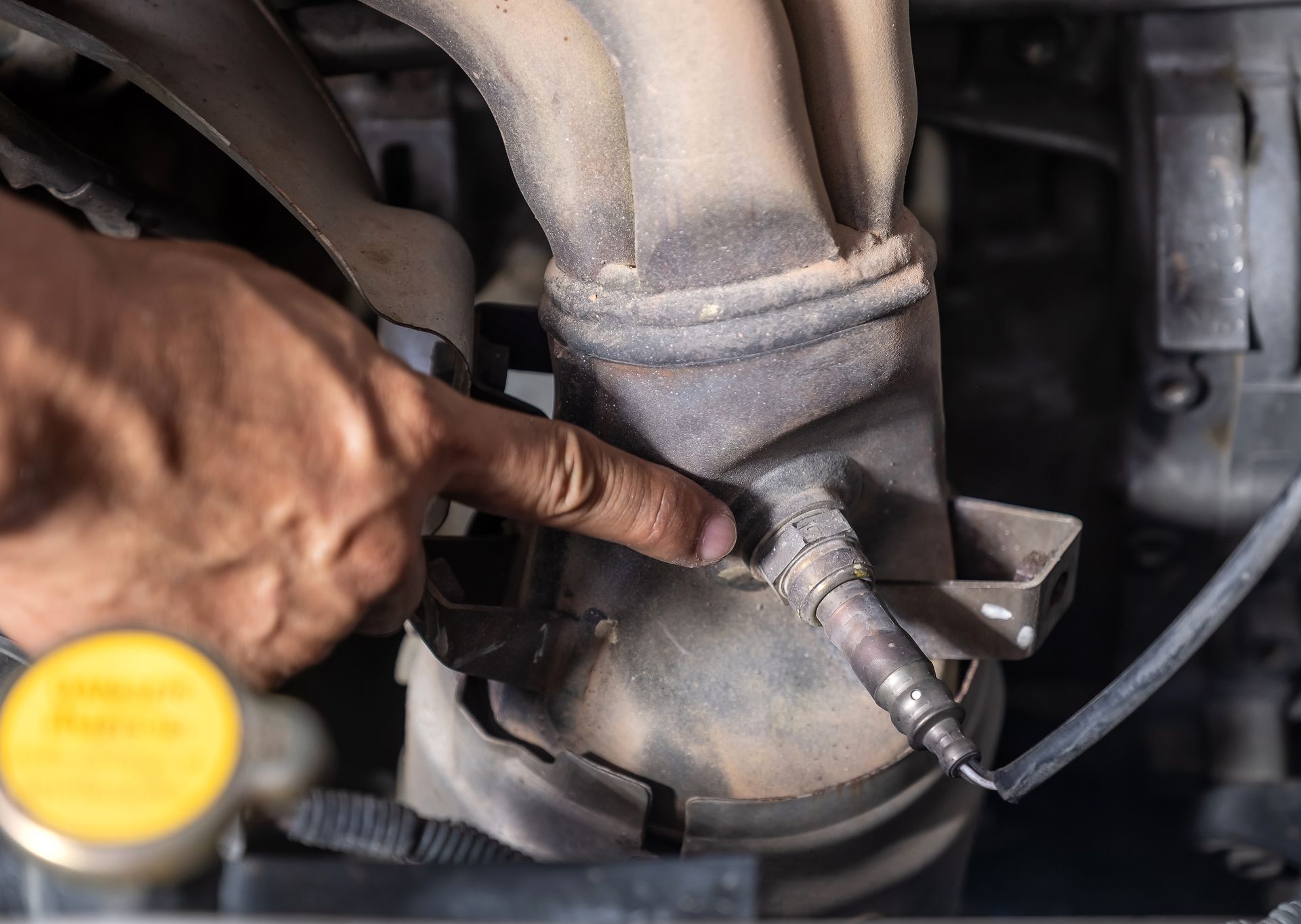
Not every clunk over a bump comes from the suspension. Exhaust hangers, heat shields, splash panels, and other underbody parts can move enough to hit nearby components when the body flexes.
A loose exhaust hanger may create a hollow knock that sounds as though it is coming from the rear suspension. Heat shields tend to produce lighter rattling or metallic buzzing.
This is why we reproduce the noise before replacing parts whenever possible. The sound location from the driver's seat can be misleading because vibration travels through the body.
Do Not Let a New Suspension Noise Become Background Noise
Some squeaks come from dry rubber or normal movement, while a heavy clunk can point to actual looseness. The important part is whether the noise is new, getting louder, or appearing with changes in steering, tire wear, or vehicle stability.
Regular maintenance gives us opportunities to catch worn links, bushings, joints, and leaking shocks before they become severe. If the vehicle starts wandering, one corner sits lower, or the steering changes along with the noise, have it checked sooner rather than simply turning up the radio.
Get Suspension Noise Repair In Waldorf, MD, With Ashten's Total Auto Care
If your car clunks, squeaks, or knocks over speed bumps and uneven roads, Ashten's Total Auto Care in Waldorf, MD, can check the sway bar links, bushings, ball joints, shocks, struts, springs, and underbody components to find the source.
Schedule a visit and have the noise identified before loose suspension parts begin affecting handling or tire wear.